How the 1980s Set the Stage for Modern Electromagnetic Dominance


The following article was published in the May 2024 issue of the Journal of Electromagnetic Dominance (JED) as part of the AOC’s 60th anniversary celebration.
By Wayne Shaw
In the 1980s, the DOD made key investments in electromagnetic warfare (EW) that would pay dividends within the decade.
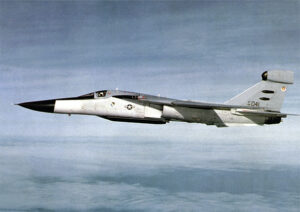
In November 1981, the US Air Force’s 388th Electronic Combat Squadron at Mountain Home AFB, ID, took delivery of its first EF-111A Raven. After the demise of the EB-66 and a gap of nearly a decade, the Air Force once again possessed an operationally useful force of jamming escort planes. By December 1985, there were EF-111 squadrons at Mountain Home AFB as well as at RAF Upper Heyford in the UK. Just a few months later, five EF-111s from this unit would fly in Operation Eldorado Canyon in the night skies over Libya, marking the combat debut of the EF-111 and her crews.
The EF-111 would likely never have been built were it not for the mature ALQ-99 tactical jamming system (TJS). The airplane and her crews who made that possible and would perfect the ALQ-99 Tactical Jamming system was the US Navy’s EA-6B Prowler. The EA-6B and its crews also flew in Operation Eldorado Canyon in 1986. They flew off the USS America and the USS Coral Sea. In addition, the final variant of the EA-6B appeared in the 1980s – the Improved Capability II (ICAP II) in 1984 and the Block 86 in 1988. ICAP II EA-6Bs allowed it to carry the AGM-88 High-speed Anti-radiation Missile (HARM), and the Block 86 EA-6B added the ALQ-126B pulse jammer.
The US Marine Corps (USMC) also flew the EA-6B, as well as operated ground EW systems. Of note in the 1980s, the USMC had units deploy to Beirut, Lebanon, and also took part in the short-notice intervention in Grenada. In 1989, the USMC took center stage in Operation Just Cause in Panama.
The US Army was busy in the early 1980s in Central and South America. There, they flew the RC-12G aircraft (a Beech King Air with lots of EW gear and antennas) outfitted with the Sanders URR-75 receiving system for the “Crazy Horse” program. These Crazy Horse planes and their crews and support personnel went on deployment to Honduras as part of the US effort to assist the government of El Salvador as it put down an insurrection. This was regarded as one of our first “Radio Shack wars” against adversaries who used HF and VHF communications systems purchased on the commercial market. (This was a foreshadowing of the counter-RCIED efforts in Iraq and Afghanistan in the coming decades.)
In Europe, in the early 1980s, the Panavia Tornado entered service and development work was undertaken on the ECR Tornado, which would enter service right after the next decade began in 1990. Tornados were in service with the Air Force and Naval Air Forces of the UK, Germany and Italy, with much joint training, such as the training of German Air Force and German Navy weapons system officers/electronic warfare officers at Mather AFB, Calif., in the 1980s.
An important point for policy makers – all these investments in EW paved the way for a totally unforeseen security crisis in the early 1990s: Operation Desert Storm.
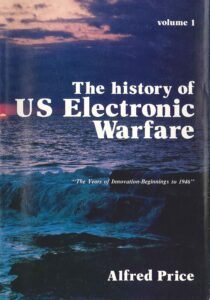
The AOC itself continued its progress toward professionalism when it moved into its then-new headquarters building on North Payne Street at the end of 1986. In 1983, the AOC Hall of Fame award was established with Dr. Fred Terman being the first person inducted into this hall of fame. The following year, Alfred Price published the first volume of The History of Electronic Warfare. In 1986, the AOC Educational Foundation was established and approved by the Internal Revenue Service as a non-profit, charitable, tax-exempt organization. AOC’s current 5-Year Strategy and Annual Operating Plan contain aggressive “stretch” goals for growing our membership, as well as making the foundation financially self-sufficient. The 1980s were a great decade for the AOC with membership peaking in 1988 in conjunction with US President Ronald Reagan’s buildup of the US military. AOC peaked at approximately 25,000 members. Just before the end of the decade, in 1989, the AOC published the second volume of The History of Electronic Warfare by Alfred Price.