How 9/11 Defined a Decade for EW and AOC


The following article was published in the August 2024 issue of the Journal of Electromagnetic Dominance (JED) as part of the AOC’s 60th anniversary celebration.
By Wayne Shaw
The 2000s started with a terrorist attack on the USS Cole in the Middle East in September 2000. This “tremor” presaged a “seismic event” in the national security situation of the United States – and, in fact, the world – almost exactly one year later. The attacks of September 11, 2001, on the Twin Towers in New York City and the Pentagon, as well as other bravely thwarted terrorist attacks, led directly to Operation Enduring Freedom (OEF) in late 2001 in Afghanistan and Operation Iraqi Freedom (OIF) in early 2003. The September 11 attacks were that generation’s “Pearl Harbor moment.” As in all modern warfare, both OEF and OIF included significant electromagnetic warfare (EW) planning and execution, which helped ensure victory and preserve the lives of US and allied soldiers.
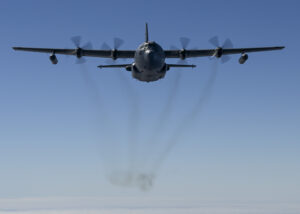
A member of the Billy Mitchell Chapter in San Antonio, TX, spent over a month at Shaw AFB, SC, planning the EW aspects of “shock and awe” and gave an outstanding presentation to the chapter in the 2009 timeframe. The EW aspects of OIF included such staples as conditioning the Iraqi Air Defenses leading up to H-Hour, but they also included innovative and unique aspects, such as using end-of-life RQ-1 Predator drones to stimulate the Iraqi Air Defenses once it was “showtime” and BQM-74 Firebee drones dropping chaff on their ingress routes into Iraq. Although the EW plan contributed to the success of the Iraq invasion in 2003, the aftermath of the invasion quickly turned ugly in the form a full-blown insurgency.
By 2004, the insurgency had spawned a form of improvised explosive device (IEDs) seen first in Northern Ireland in the 1970s. Innovative Iraqi insurgents used available electronic components to fashion a variety of radio-controlled IEDs (RCIEDs). In a surge of industry patriotism and energy reminiscent of World War II, a menagerie of RCIED jammers soon appeared in Iraq (and eventually in Afghanistan). To manage these RCIED jammers, which had in turn given birth to some new lexicon including Counter RCIED EW (CREW), two new EW organizations were established: Joint CREW Composite Squadron – One (JCCS-1), which would lead the operational effort to manage thousands of RCIED jammers in Iraq; and in Afghanistan its comparable organization was Task Force Paladin. There were also all manner of airborne RCIED jamming from US Navy and US Marine Corps EA-6B Prowlers and US Air Force EC-130H Compass Calls with the US Army starting developmental efforts for its own airborne EW capability (for example, Communications Electronic Attack Surveillance and Reconnaissance, or CEASAR).
AOC was not isolated from the seismic shift caused by the 9/11 attacks. While smoke was still rising from the Pentagon, AOC staff and board wrestled with the difficult decision of whether to proceed with the annual convention in Washington, DC. Would even loyal AOC Convention attendees come to Washington, where terrorists had just recently flown an airliner into the Pentagon? Ultimately, the decision was made to not let the terrorists score another victory by altering our behavior, and the AOC Convention went ahead as planned. Due in part to the events of 9/11, AOC staff had to nimbly deal with a union dispute in which union workers refused to unload the long line of semi-trucks that arrived at the convention hotel with exhibition materials. The AOC staff handled the potentially 11th-hour work stoppage with professionalism and finesse.
The 2000s was also the last full decade of the AOC Convention moving around the United States. Early in the next decade, a conscious decision was made by the AOC Board of Directors to keep the AOC Convention in Washington, DC, to allow for more Washington-based decision-makers to walk the corridors of the AOC Convention Exhibit Hall, speak as keynotes, attend sessions, and “be present” at the AOC Convention. That decision has paid large dividends for the AOC as a whole.
The 2000s is when the AOC created a full-time, paid staff position called “Director of Government and Industry Affairs” in early 2003. The very first person to fill that role in late April 2003 was Mr. A.R. “Trey” Hodgkins, who filled this position from 2003-2005. It was also at this same time that the AOC registered as a federal lobbying organization and thereby entered the Washington, DC, policy arena in a more official way. When Trey moved on, Ken Miller came onboard in 2005 and started providing his expertise to the AOC, which continues to this day.